From late October onwards, overflowing gutters are most of what we're called about. The leaves are down, the rain's heavier, and a run that coped all summer suddenly sends water over the front edge and down the wall.
The good news is that you can usually work out what's going on from the ground, which helps you describe it when you ask for a quote.
Read where the water comes over
Stand back in a downpour and watch the gutter line. Where it overflows tells you most of what you need to know.
- Overflow at one spot halfway along: a clump of debris, or the gutter has sagged there.
- Overflow along the whole run: the outlet or the downpipe below it is blocked, so water has nowhere to go.
- Water dripping from underneath: a leaking joint or cracked section rather than a blockage.
- Water coming over at an internal corner or valley: debris washed off the roof has built up where two slopes meet.
- A downpipe that stays silent while the gutter above overflows: the downpipe is blocked.
What to do in the meantime
Don't go up a ladder in wind or rain — wet rungs and a full, heavy gutter are a bad combination, and most gutter accidents happen exactly then. If water is soaking one wall, an old towel or a bucket under the worst spot won't fix it, but moving pots, bins and anything stored against that wall will stop it getting worse.
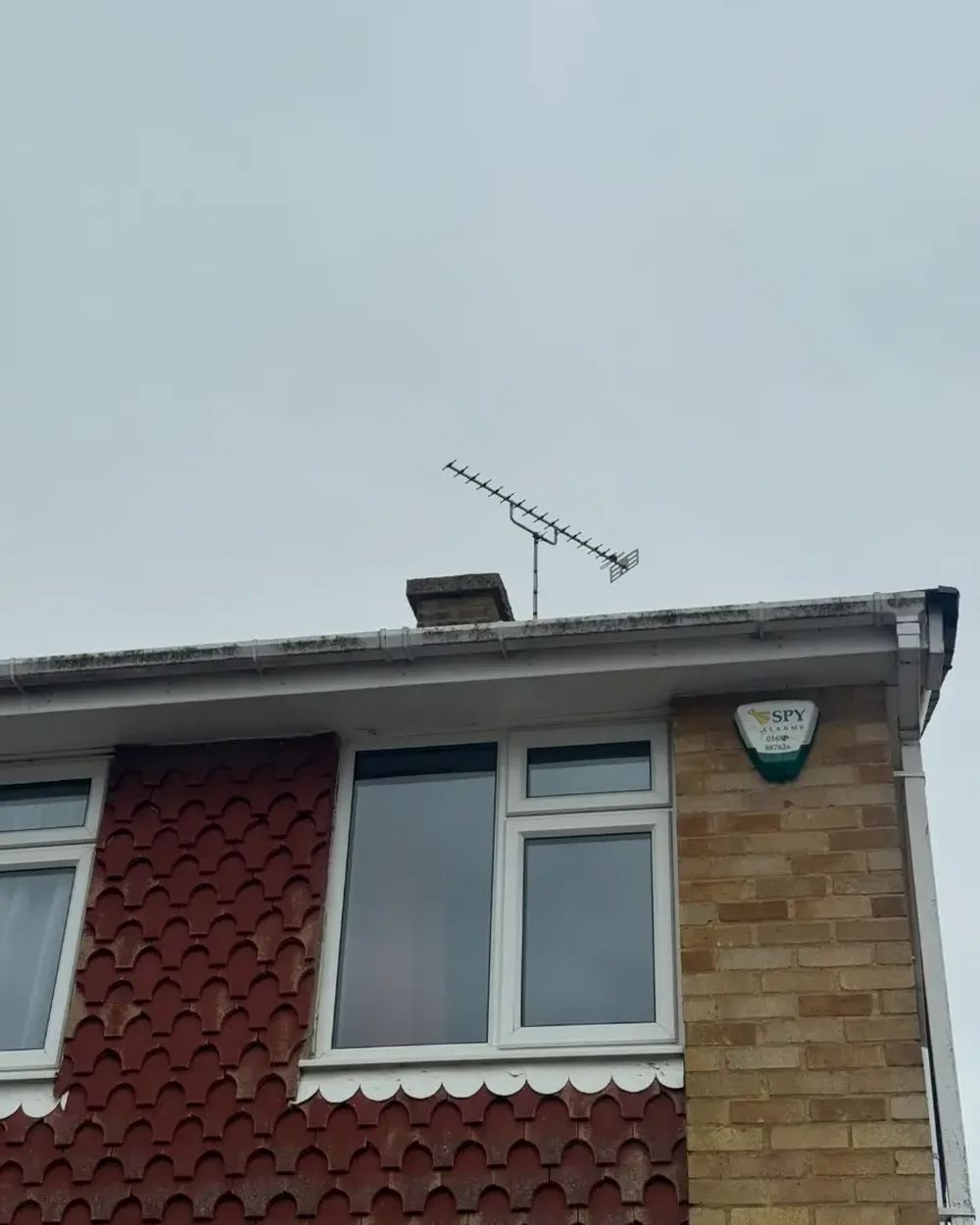
Note down which side of the house it is, roughly how long the run is and whether it's a single-storey or two-storey gutter. A couple of photos from the ground helps too, and you can send those with your quote request.
Why this time of year is the worst
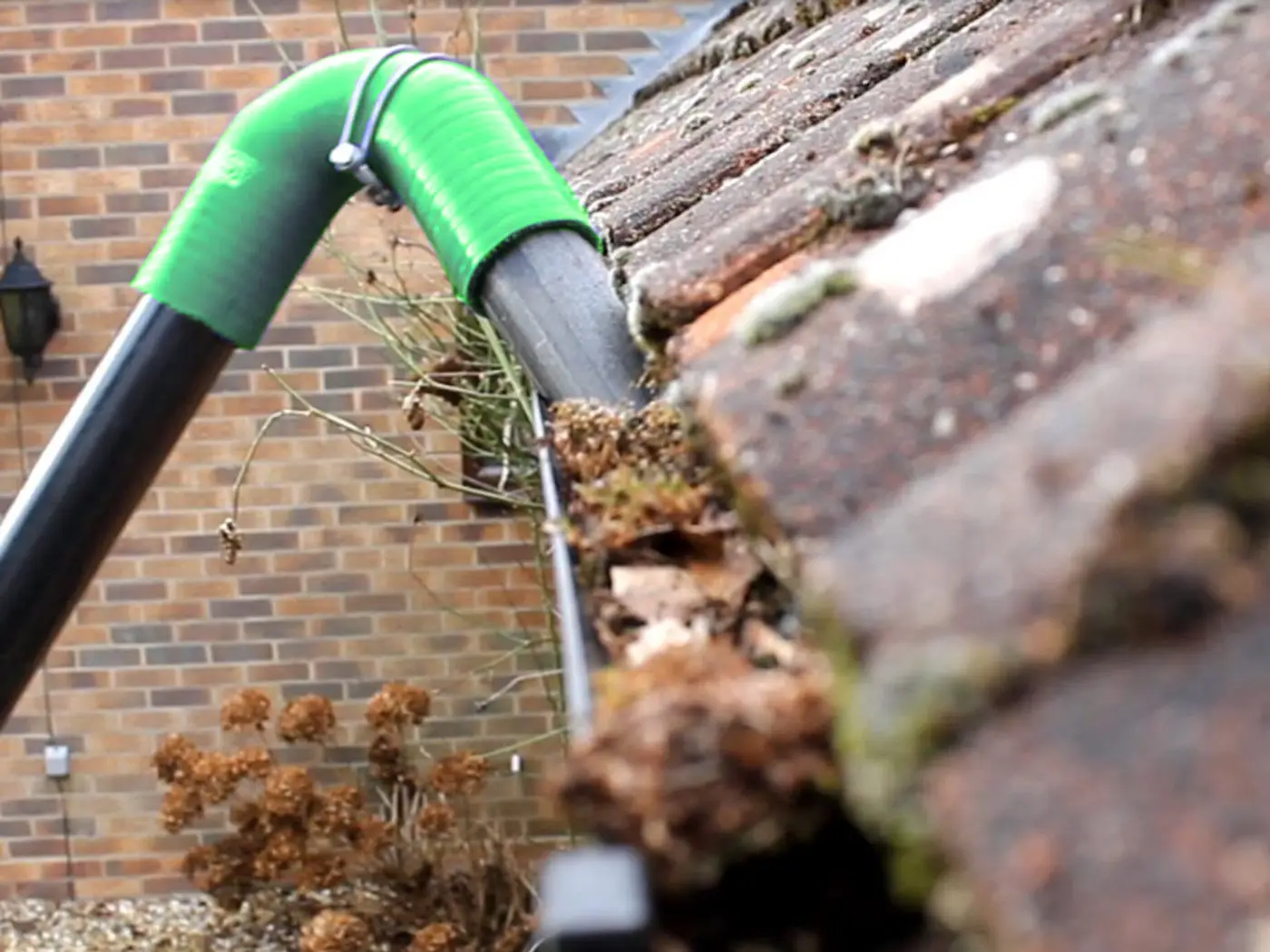
Autumn leaf fall lands on top of everything that's built up over the year — broken-up roof moss, grit off concrete tiles and seeds. It packs down wet in the base of the gutter, and the first heavy rain finds every weak spot at once.
Properties under trees and roofs already carrying moss fill up fastest. If yours is one of those, a clear once the leaves are down and another in spring is usually worth it.
How we sort it
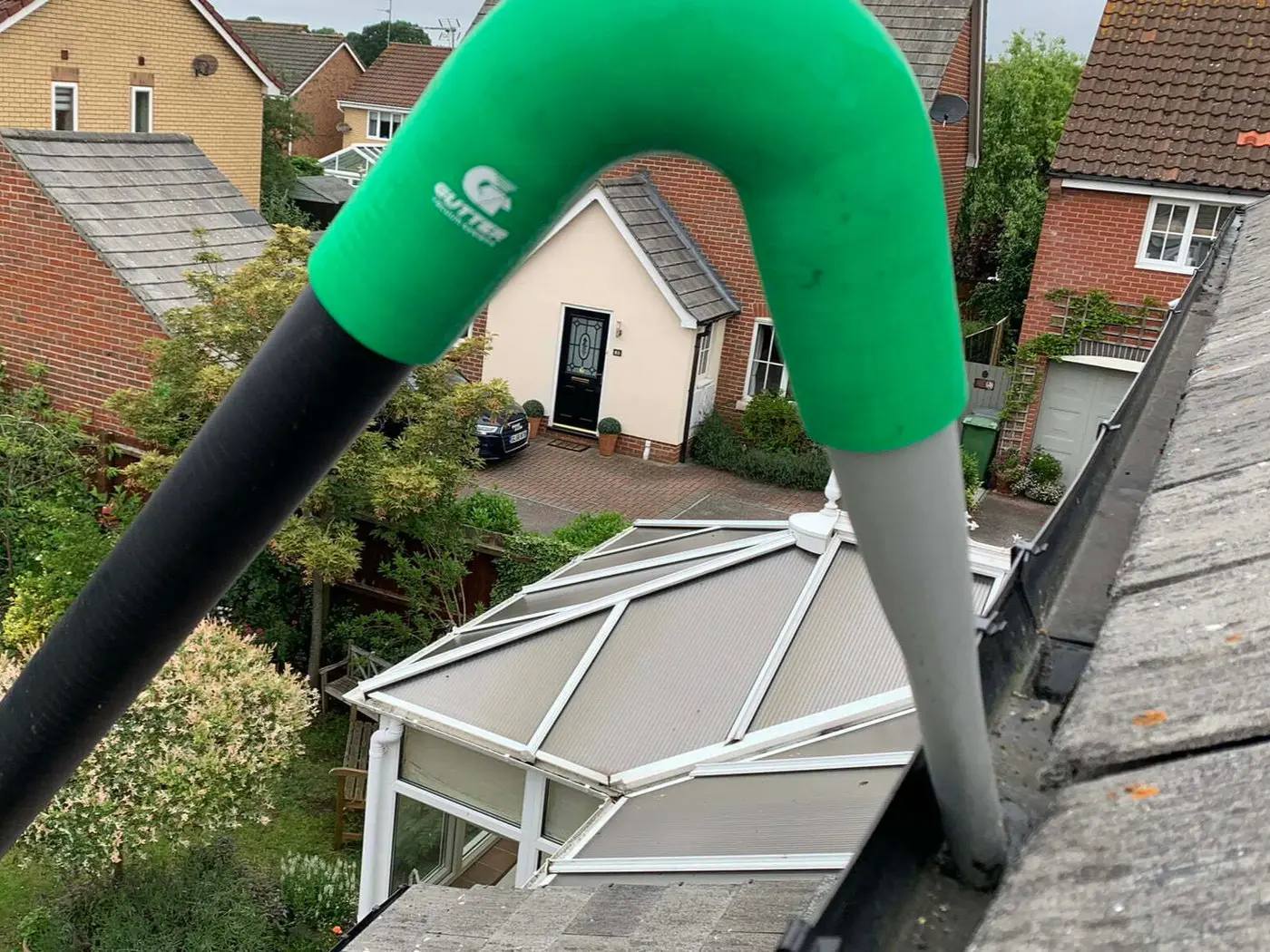
We clear most gutters from ground level with a carbon-fibre gutter vacuum, take photos before and after, flow-test every downpipe and take the debris away. If a section has dropped out of level or a joint is leaking, we'll tell you what we saw and photograph it, rather than guessing.
You can get an instant price for a standard gutter clear with our online gutter calculator.
The short version
- Overflow at one spot usually means a clump or a sag; overflow along the whole run usually means a blocked outlet or downpipe.
- Never climb a ladder to a full gutter in wind or rain.
- Photos from the ground help us quote accurately.
- Trees and a mossy roof mean more frequent clears.