Gutters are the cheapest part of a house to maintain and the most expensive to ignore. A blocked run sends water down the wall instead of into the drain, and within a couple of wet Kent winters you are looking at damp plaster, rotten fascia timber and stained render rather than a half-day gutter clear.
There is no single correct interval, but there is a sensible default and a set of things that shift it.
The default: once a year
For a typical Kent semi or detached house with open aspect and no overhanging trees, once a year is enough. Late autumn — once the leaves are down but before the winter rain sets in — is the best single slot in the calendar, because the gutter goes into the wettest months empty.
If you can only book one visit a year, book it between late October and December.
When twice a year is the right call
Some properties simply fill faster. If any of the following apply to your house, plan on spring and autumn rather than autumn alone:
- Overhanging trees — particularly limes, sycamores and conifers, which drop something in nearly every season.
- A shallow roof pitch, which lets moss and grit wash slowly into the gutter all year rather than in one autumn dump.
- Older clay or concrete tiles carrying moss — the moss breaks up and travels straight into the gutter line.
- Box gutters, parapet gutters and hidden valleys, where a blockage backs up into the roof structure instead of spilling harmlessly over the front edge.
- A house that has already had an overflow. Once a downpipe has silted at the base it tends to re-block quickly.
Signs your gutters are already blocked
You rarely need a ladder to spot a problem. From the ground, in the rain, look for water sheeting over the front lip of the gutter rather than travelling to the downpipe, and listen for a downpipe that stays silent during heavy rain while the others are running.
- Green or dark staining running vertically down the wall or render below the gutter line.
- Plants, grass or self-seeded saplings visible above the gutter edge.
- Water splashing onto a windowsill or doorstep in a downpour.
- Sagging brackets or a gutter that has dropped out of level — usually the weight of wet debris.
- Damp patches appearing on internal walls in the same place each winter.
Why we vacuum rather than climb
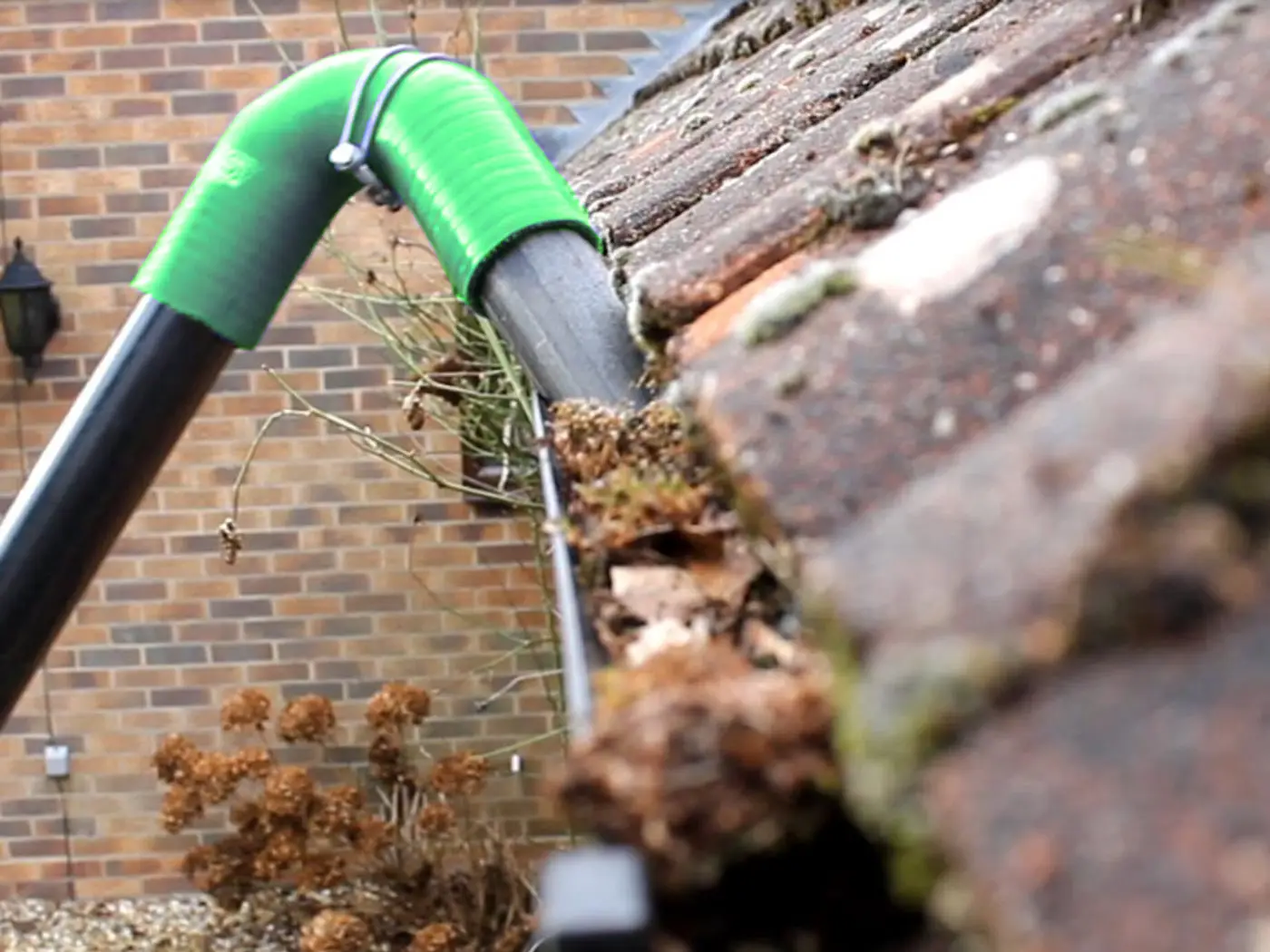
We clear the majority of domestic gutters from ground level using a carbon-fibre gutter vacuum. It is quicker, it keeps a ladder off your fascia boards and window frames, and we photograph the run before and after rather than asking you to take our word for it.
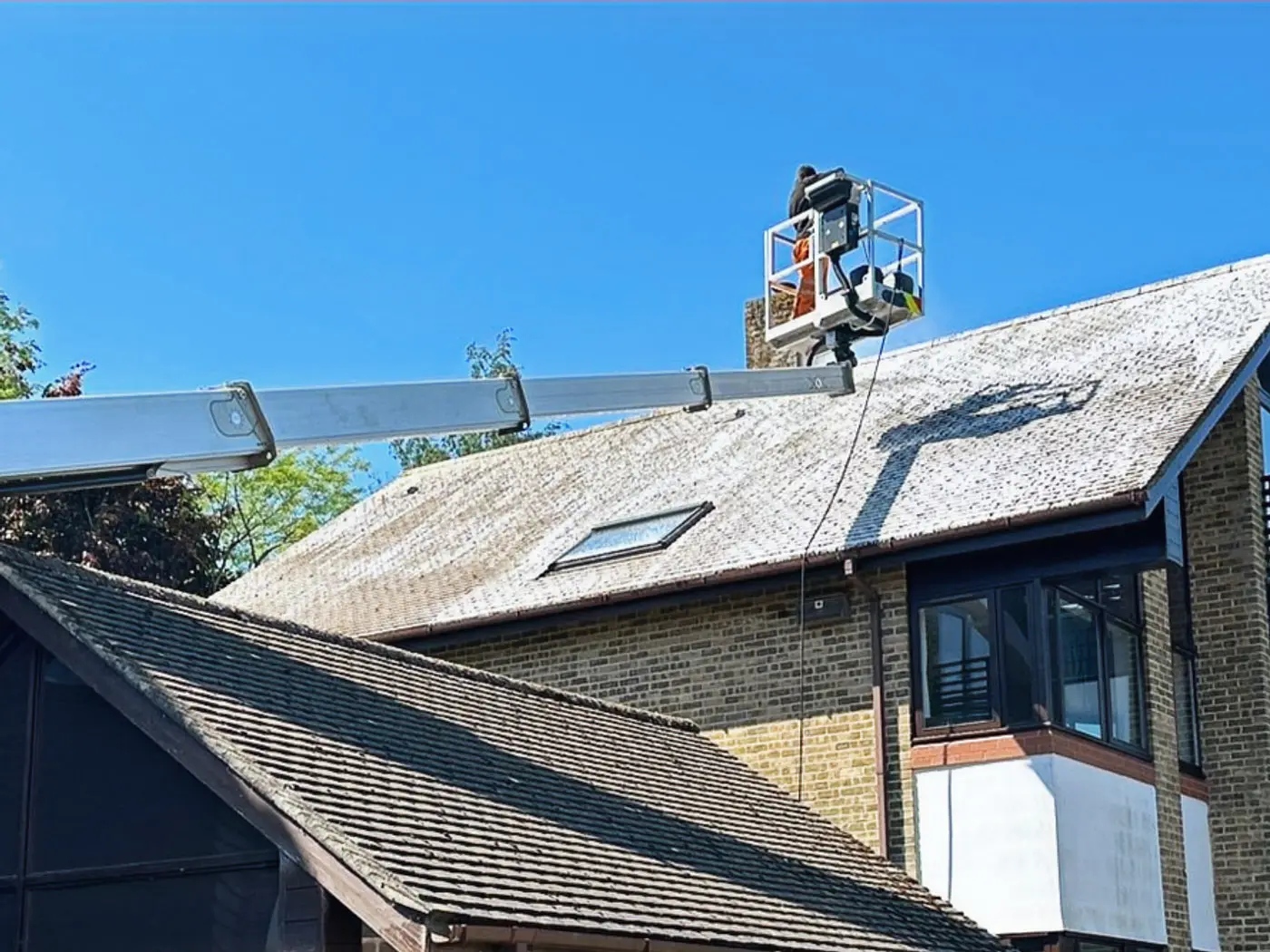
Where a run genuinely cannot be reached from the ground — an enclosed courtyard, a parapet, an awkward extension roof — we use tower or powered access instead. Either way the debris leaves with us, and downpipes are flow-tested before we finish.
Do it at the same time as the rest of the elevation
The gutter, fascia and soffit are one visual band. Clearing the inside of the gutter and leaving a green streak down the outside face of it is a half job, and it is the outside face that people see from the pavement. Most customers have the gutters, fascias and soffits done together in one visit, which is cheaper than two separate mobilisations.
The short version
- Once a year is the sensible default; twice for tree-heavy or moss-heavy properties.
- Late autumn is the single best slot in the Kent calendar.
- Overflow staining on the wall means the blockage has been there a while.
- Clearing the inside and cleaning the outside face at the same visit costs less than two.