Almost every damp problem we are called out to in January started as a gutter problem in October. The gutter fills, the water stops travelling to the downpipe, and it goes over the front lip and down the wall instead — repeatedly, for weeks, in the wettest part of the Kent year.
The useful thing about gutters is that they warn you first. Everything below can be checked from the ground in ten minutes, and most of it is easiest to see while it is actually raining.
The eight signs worth walking round for
Do one lap of the house in a downpour and one lap on a dry day. Between them you will catch almost everything.
- Water sheeting over the front edge of the gutter in rain instead of running along to the downpipe.
- A downpipe that stays silent in heavy rain while the others are clearly running.
- Vertical green or dark staining on the wall, brick or render directly under the gutter line.
- Grass, moss or self-seeded saplings visible above the gutter edge from the pavement.
- Water splashing onto a windowsill, doorstep or conservatory roof during a downpour.
- A gutter that has dropped out of level, or brackets pulling away from the fascia — usually the weight of wet debris.
- Damp patches that appear on the same internal wall every winter and dry out in summer.
- Granules, moss fragments or grit collecting on the ground under the downpipe outlet.
Why Kent gutters fill faster than people expect
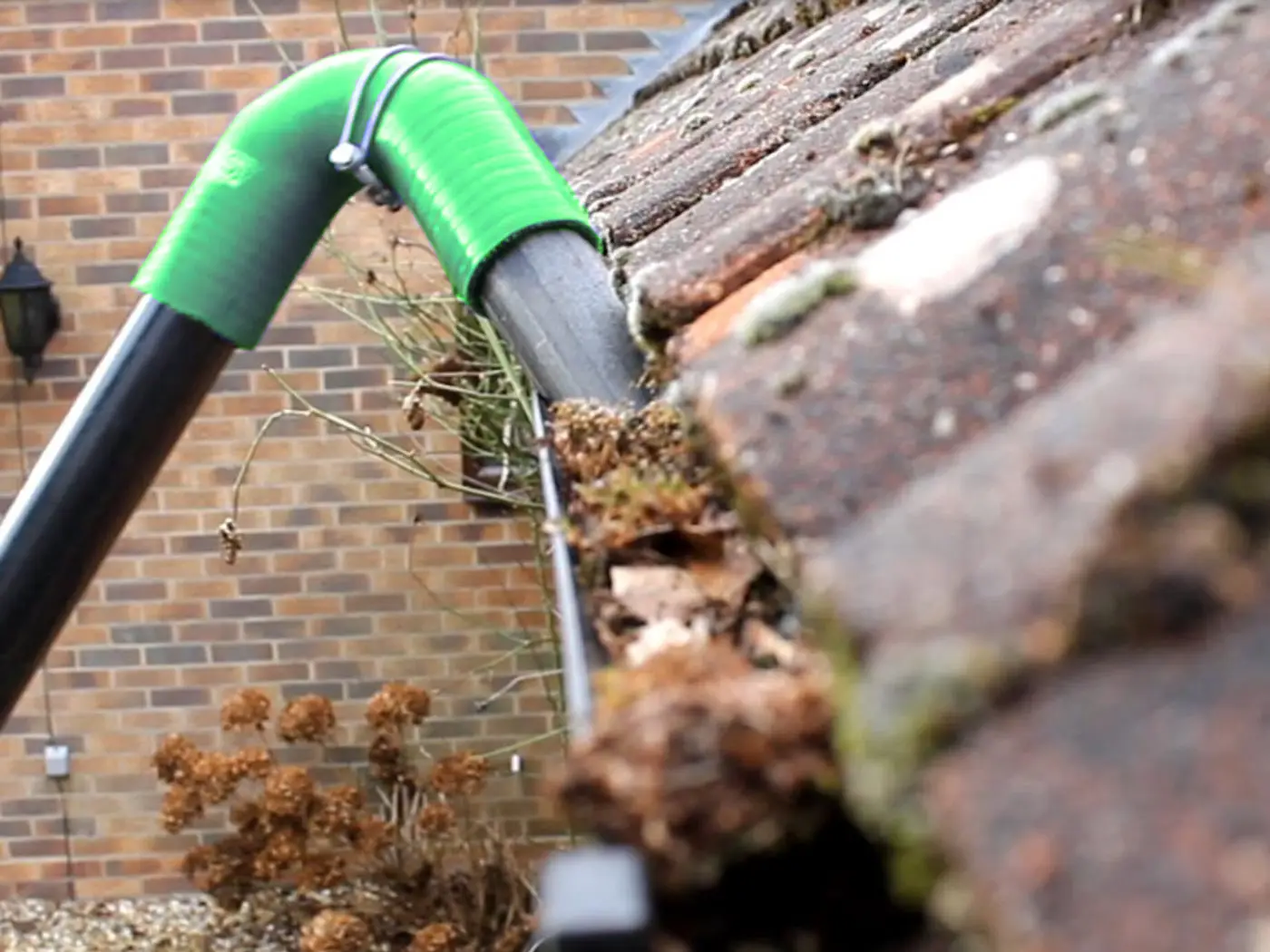
It is not only leaves. A large share of what we vacuum out of Kent gutters is roof moss that has broken up and washed down the tiles, plus the fine grit that comes off older concrete tiles as they weather. That material does not blow away the way leaves do — it packs down into a wet sludge that sets in the base of the run.
Properties under limes, sycamores and conifers, houses with a shallow roof pitch, and any roof already carrying visible moss all fill considerably faster than an open-aspect house with a clean roof.
What it costs to leave it
A gutter clear is a half-day job on most homes. The things it prevents are not. Persistent overflow rots fascia and soffit timber, saturates the wall behind it, stains render in a way that then needs softwashing to remove, and in the worst cases pushes damp through to internal plaster.
Where a blockage sits in a box gutter, parapet or hidden valley, the water backs up into the roof structure instead of spilling over the front — which is why those runs are worth checking even when nothing is visible from the pavement.
When to book
Late October to December is the single best slot: the leaves are down, and the gutter goes into the wettest months empty. If your property is under heavy tree cover, add a spring visit to clear what came down over winter.
Book earlier than you think. The weeks after the first serious autumn storm are our busiest of the year, and the properties that flooded in November are usually the ones that were on the list for December.
What we actually do on the visit
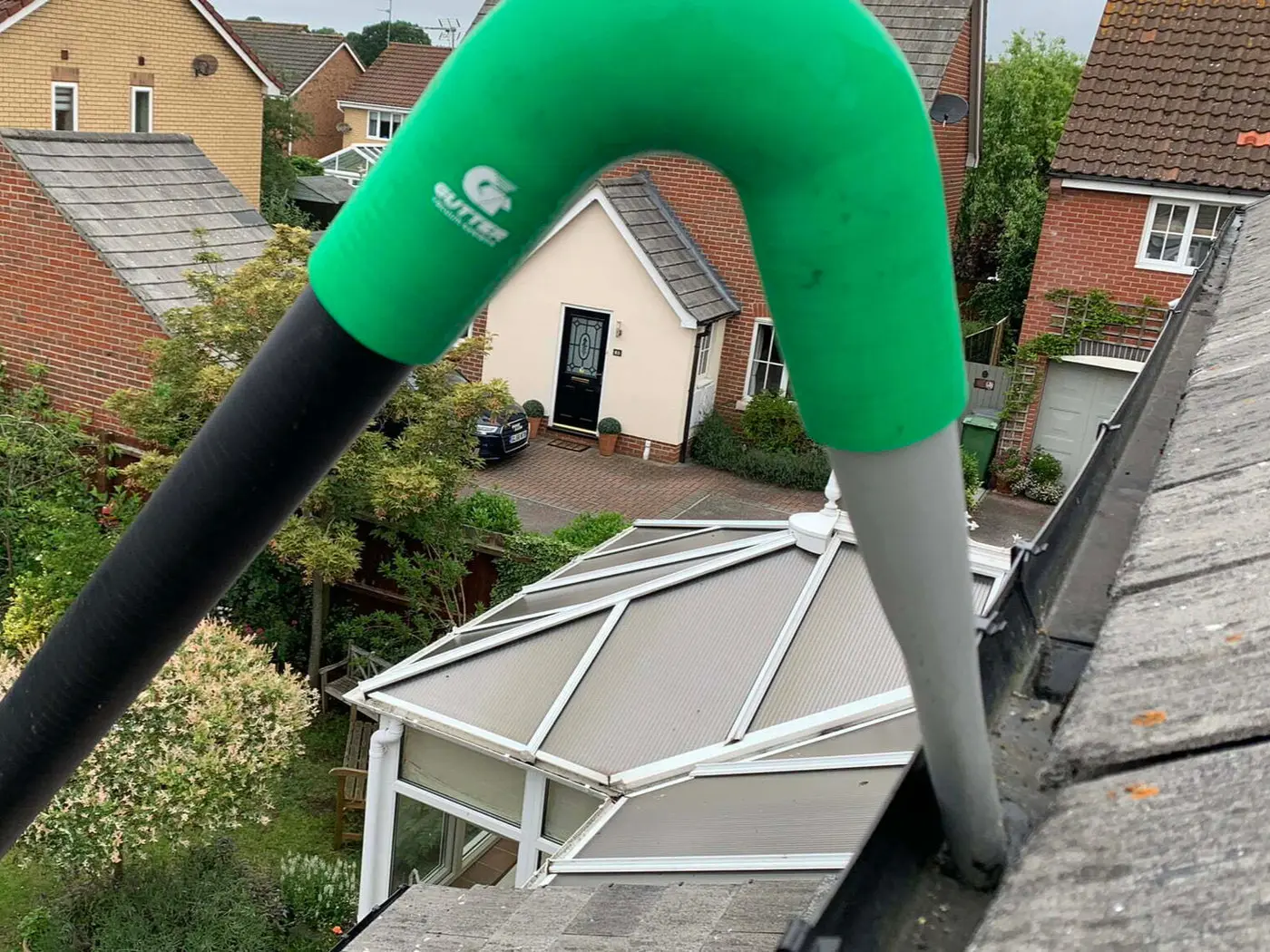
We clear most domestic gutters from ground level with a carbon-fibre gutter vacuum, photograph the run before and after, flow-test every downpipe, and take the debris away with us. Where a run cannot be reached from the ground we use tower or powered access instead.
If the outside face of the gutter, the fascia and the soffit are also green, it is cheaper to have them scrubbed in the same visit than to bring us back for a second mobilisation.
The short version
- Check in the rain — overflow and a silent downpipe are the two clearest signs.
- Staining down the wall means the blockage has been there for months, not days.
- Roof moss, not just leaves, is what fills most Kent gutters.
- Late October to December is the slot to aim for; book before the first storm.