Kent has no shortage of period properties — Victorian and Edwardian terraces in Maidstone and the Medway towns, older cottages out in the villages — and plenty of them still carry their original cast iron guttering. It clears differently to modern plastic, and it's worth knowing how.
How cast iron differs from plastic
Cast iron gutters are deeper and heavier than plastic, with bolted joints rather than clip-together fittings, and they're usually painted. They hold more debris before they overflow, which sounds like an advantage but means a blockage can sit unnoticed for longer — and a full cast iron gutter is carrying a lot of weight on fixings that may be a century old.
The other difference is rust. Where the paint has failed, iron corrodes, and a rusted-through section leaks much like a failed plastic joint.
The signs are the same
Whatever the material, a blocked gutter gives itself away the same way: water over the front edge in rain, staining down the wall, plants above the gutter line, silent downpipes. On cast iron, add rust streaks and flaking paint to the list — both are worth acting on before the metal itself goes.
Clearing it without damaging it
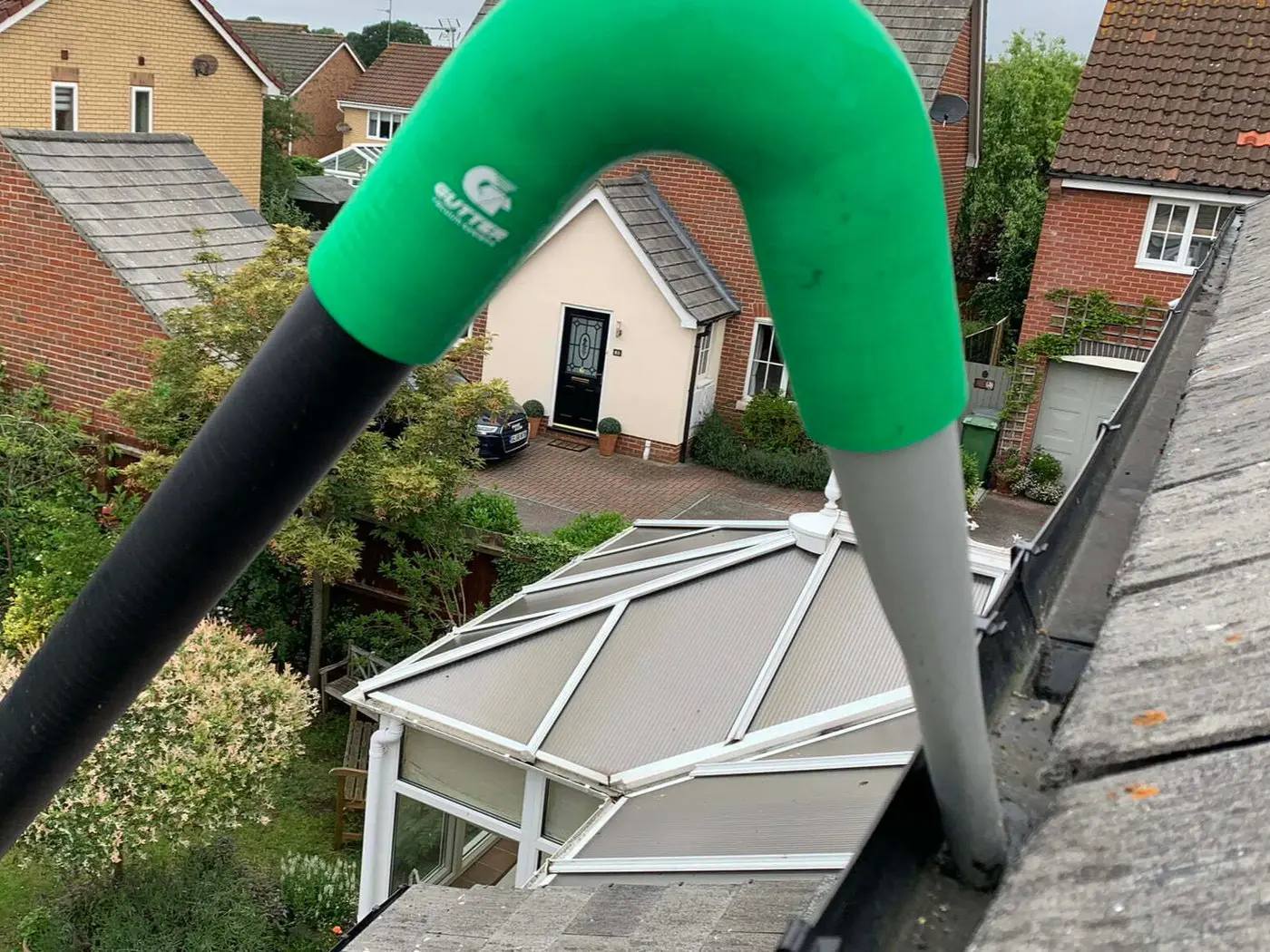
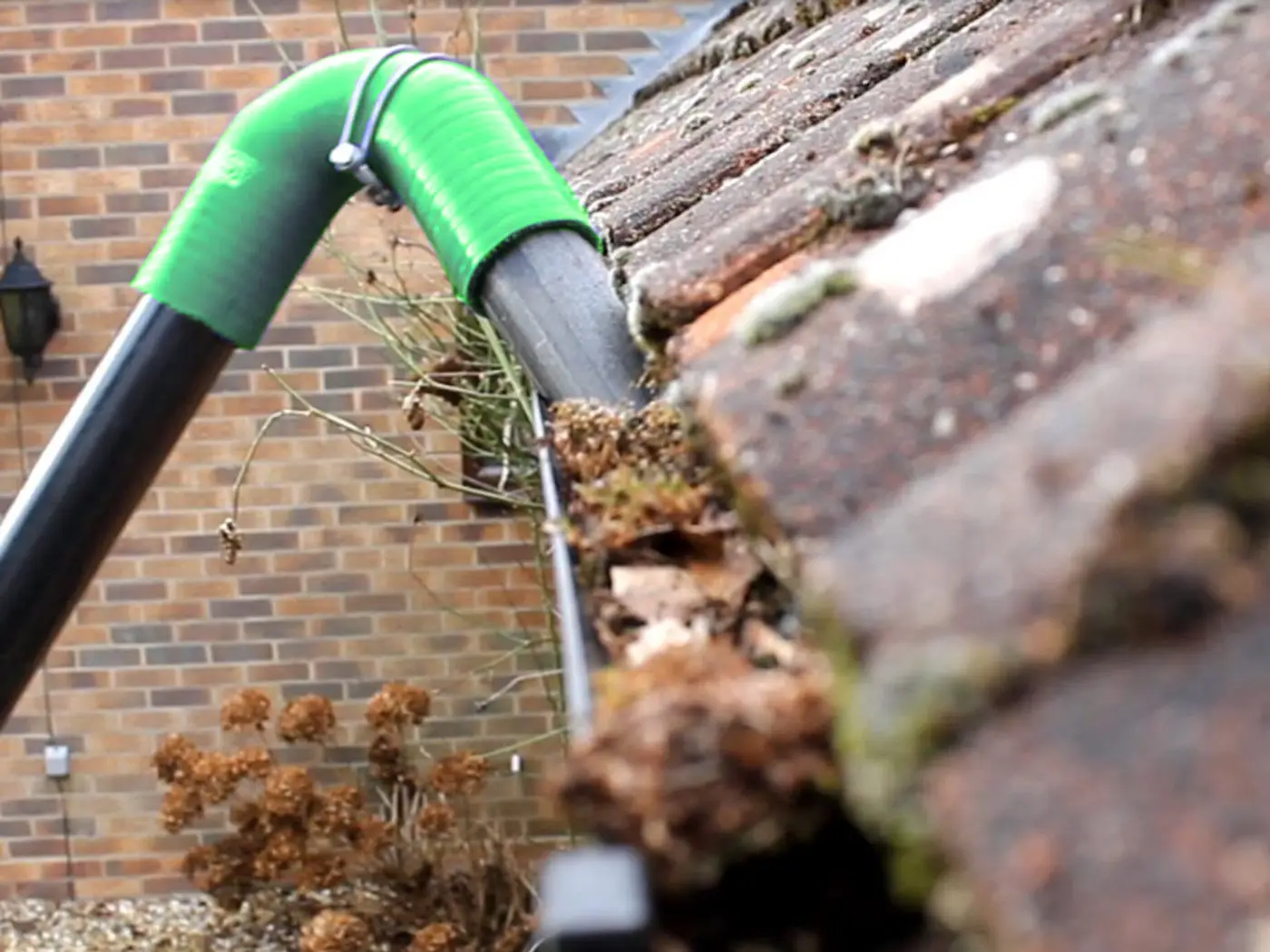
The main risk with cast iron isn't the clearing itself, it's how it's reached. Leaning a ladder against an old iron gutter — or its brackets — is a good way to crack a section that's survived a hundred years. We clear from ground level with a gutter vacuum wherever possible, which keeps weight off the gutter entirely.
Debris comes out the same way as plastic, downpipes are flow-tested, and you get before and after photos of the run. If we spot failed paintwork, rust or a weeping joint while we're up there, we'll tell you — caught early, a rub-down and repaint adds decades to an iron gutter.
Should you replace it with plastic?
Usually not, if it's sound. Cast iron outlasts plastic by decades when it's maintained, and on a period property it's part of the look of the house. Replacement only really makes sense where sections have rusted through or the gutters have been leaking for years. For most period homes, regular clearing and the odd repaint is all it takes.
The short version
- Cast iron is deeper and heavier — blockages sit longer and weigh more.
- The blockage signs are the same as plastic; add rust and flaking paint.
- Ladders against old iron can crack it — ground-level clearing avoids that.
- Maintained cast iron outlasts plastic; replacement is rarely needed.