Almost every exterior cleaning disaster we get called out to repair comes from one decision: someone pointed a pressure washer at a surface that needed a softwash. Blown render, stripped roof tile granules, gouged sandstone, water forced behind cladding.
The two methods are not competing products. They do different jobs.
What pressure washing actually is
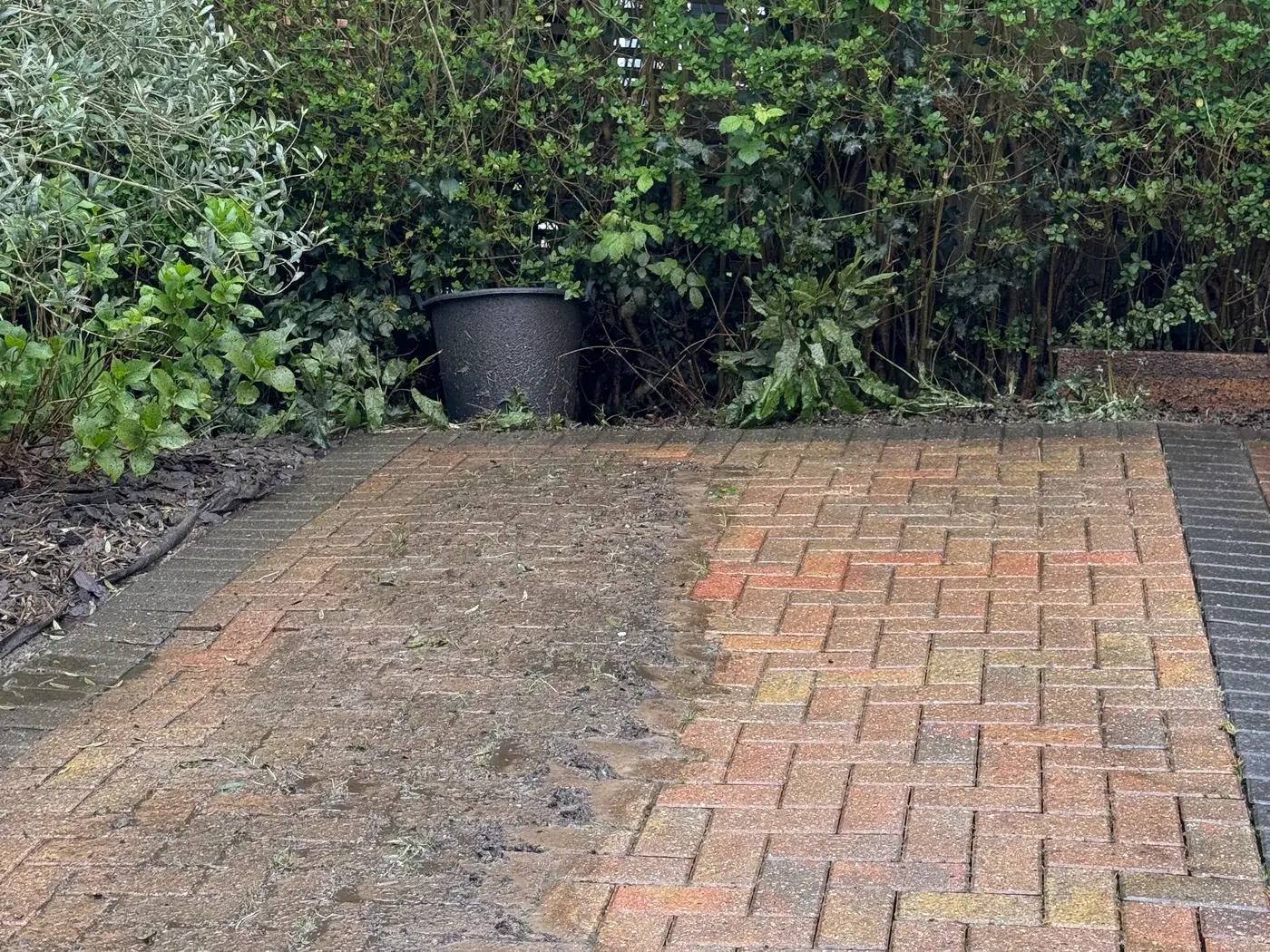
Pressure washing removes contamination mechanically — high-pressure water does the work. On block paving, concrete, natural stone slabs and tarmac-free hard standing, that is exactly right. We use a rotary flat-surface cleaner rather than a hand lance for large areas, because it keeps the pressure even and avoids the tiger-striping you get from a hand-waved fan jet.
The trade-off is that pressure does not discriminate. If a surface is soft, coated, bedded in sand, or fixed with something water can get behind, mechanical force will find that weakness.
What softwashing actually is
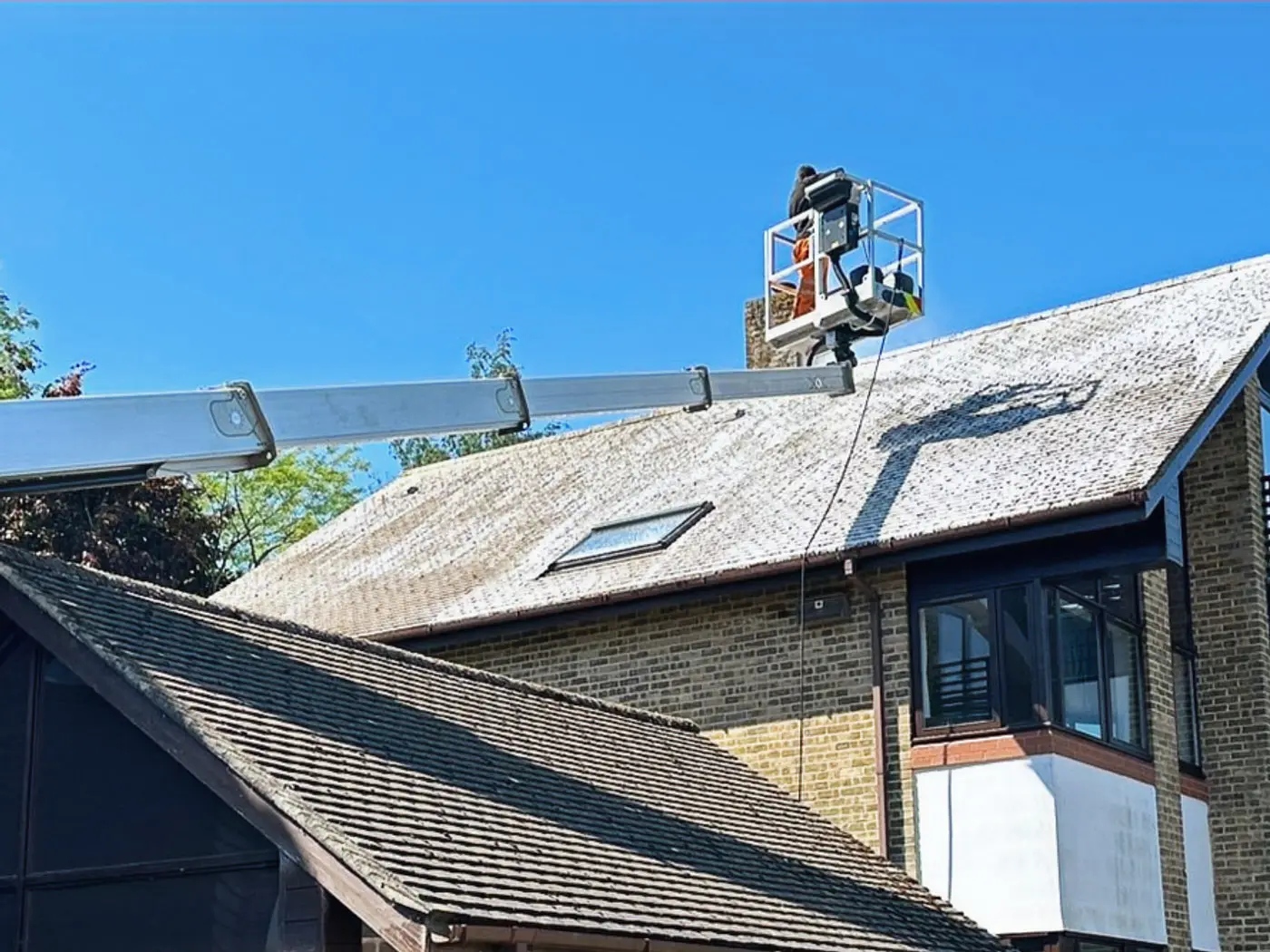
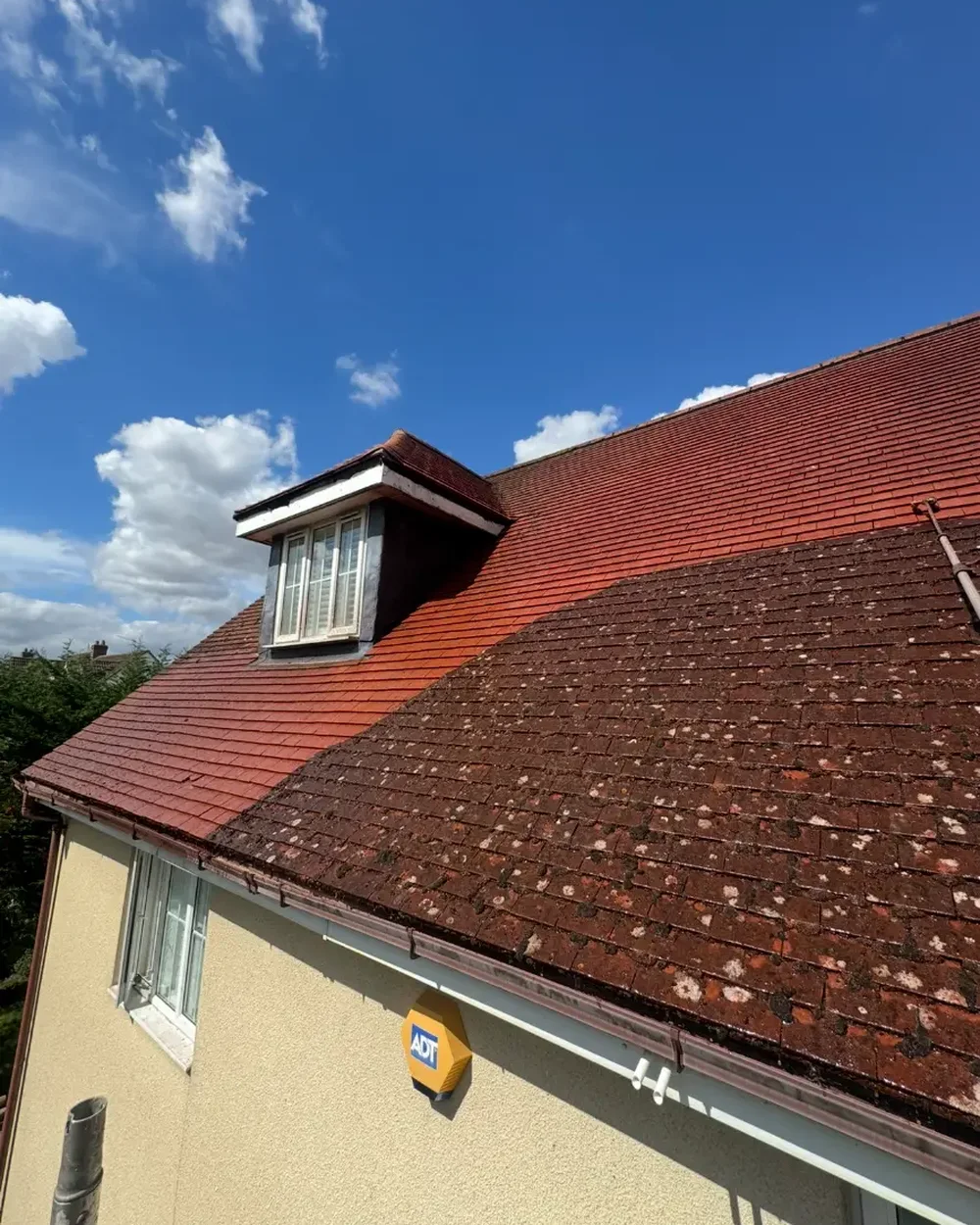
Softwashing removes contamination chemically. A biocide solution is applied at roughly garden-hose pressure, left to dwell, and it kills the algae, lichen and moss at root level. The surface is then rinsed gently or, on a roof, often left for the weather to clear the dead growth over the following weeks.
It is slower to show a result on some surfaces, and that is the point — nothing is being blasted off. It also lasts longer, because you have killed the spores rather than knocked the visible growth off and left the roots behind.
Surface by surface
A quick reference for the surfaces we are asked about most in Kent:
- Block paving driveways — pressure wash, then re-sand the joints with kiln-dried sand.
- Concrete and imprinted concrete — pressure wash; re-seal imprinted concrete afterwards.
- Indian sandstone, limestone and porcelain patios — controlled pressure, lower than block paving, plus a biocide treatment for lasting results.
- Ragstone, brick and soft older stonework — softwash. Pressure erodes lime mortar and the stone face itself.
- Tiled and slate roofs — softwash, always. Pressure strips the protective granules from concrete tiles and shortens roof life.
- Render, K-Rend and painted masonry — softwash. Pressure drives water behind the render and can crack the finish.
- uPVC fascias, soffits and cladding — chemical clean and hand scrub; pressure forces water into the roof void.
- Conservatory roofs and glazing bars — softwash with hand detailing on the bars and seals.
- Solar panels — pure water, pole-fed, no chemicals and no pressure.
The hybrid approach most jobs actually need
In practice, a full house wash uses both. The driveway is pressure cleaned, the render is softwashed, the roof is treated with a biocide, and the gutters are vacuumed. Doing them in the right order matters too — high work first, hard surfaces last, so the drive is not re-dirtied by run-off from the roof.
That sequencing is a large part of what you are paying a specialist for.
How to sanity-check a quote
If a company quotes to pressure wash your roof or your render, walk away. If they cannot tell you what biocide they use, or they intend to pressure wash sandstone at the same setting as concrete, treat that as a warning. Ask what protection is going down over planting and drains — biocide run-off into a border is avoidable with a bit of care.
The short version
- Pressure for hard paving; softwash for roofs, render, paint and plastics.
- Softwashing kills growth at root level, so it stays clean longer.
- Most whole-property jobs use both, in a deliberate order.
- Anyone offering to pressure wash a roof should not be on your roof.