Plenty of Kent homeowners are quoted for a new roof when what they actually have is twenty years of moss, lichen and organic staining on a structurally sound covering. The difference between a £600 clean and a £9,000 replacement is worth ten minutes of checking.
This is how we assess it before we quote either way.
Signs cleaning is enough
If the covering is sound and the problem is what is growing on it, cleaning is the answer.
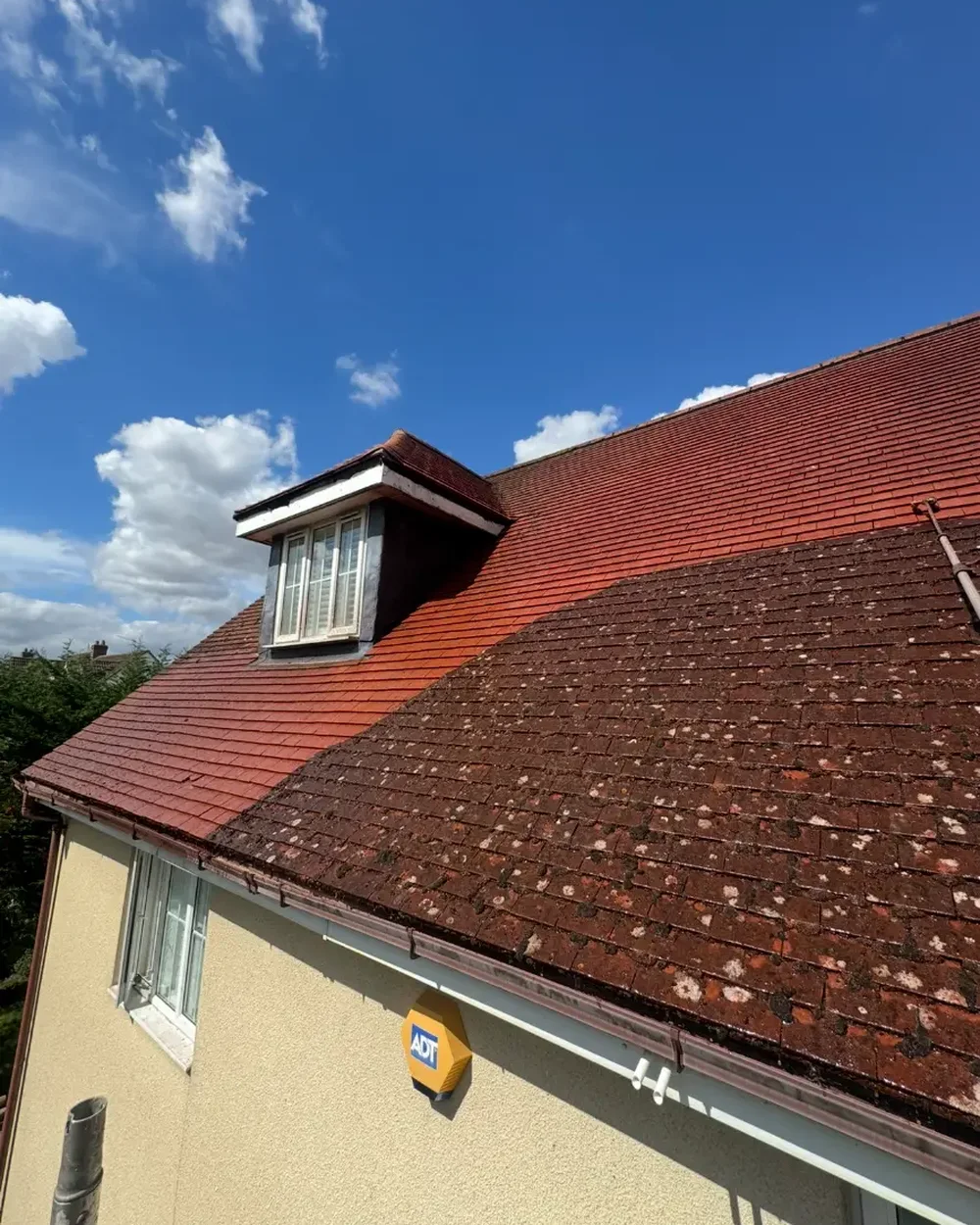
- Thick moss and lichen, but tiles that are intact and sitting flat.
- Green and black staining that is heaviest on the shaded, north-facing pitch.
- Blocked gutters full of moss granules washing off the roof.
- No damp or staining showing on ceilings or in the loft.
Signs the roof genuinely needs work
Cleaning will not rescue a failing covering, and we will say so rather than take the job.
- Tiles that are delaminating, flaking or crumbling at the edges.
- Widespread slipped or cracked tiles and failed nail fixings.
- Sagging in the roof line, or daylight visible through the loft.
- Persistent internal damp that tracks back to the roof rather than the gutters.
The cost gap
A professional roof clean and softwash treatment on a typical Kent semi or detached house is normally a few hundred pounds. A full re-roof runs into the thousands. Even where a roof has ten years left in it, cleaning buys back the appearance and stops moss holding water against the tiles in the meantime.
Cleaning also makes an honest assessment possible — once the moss is off, damaged tiles are visible rather than hidden.
How we clean rather than damage
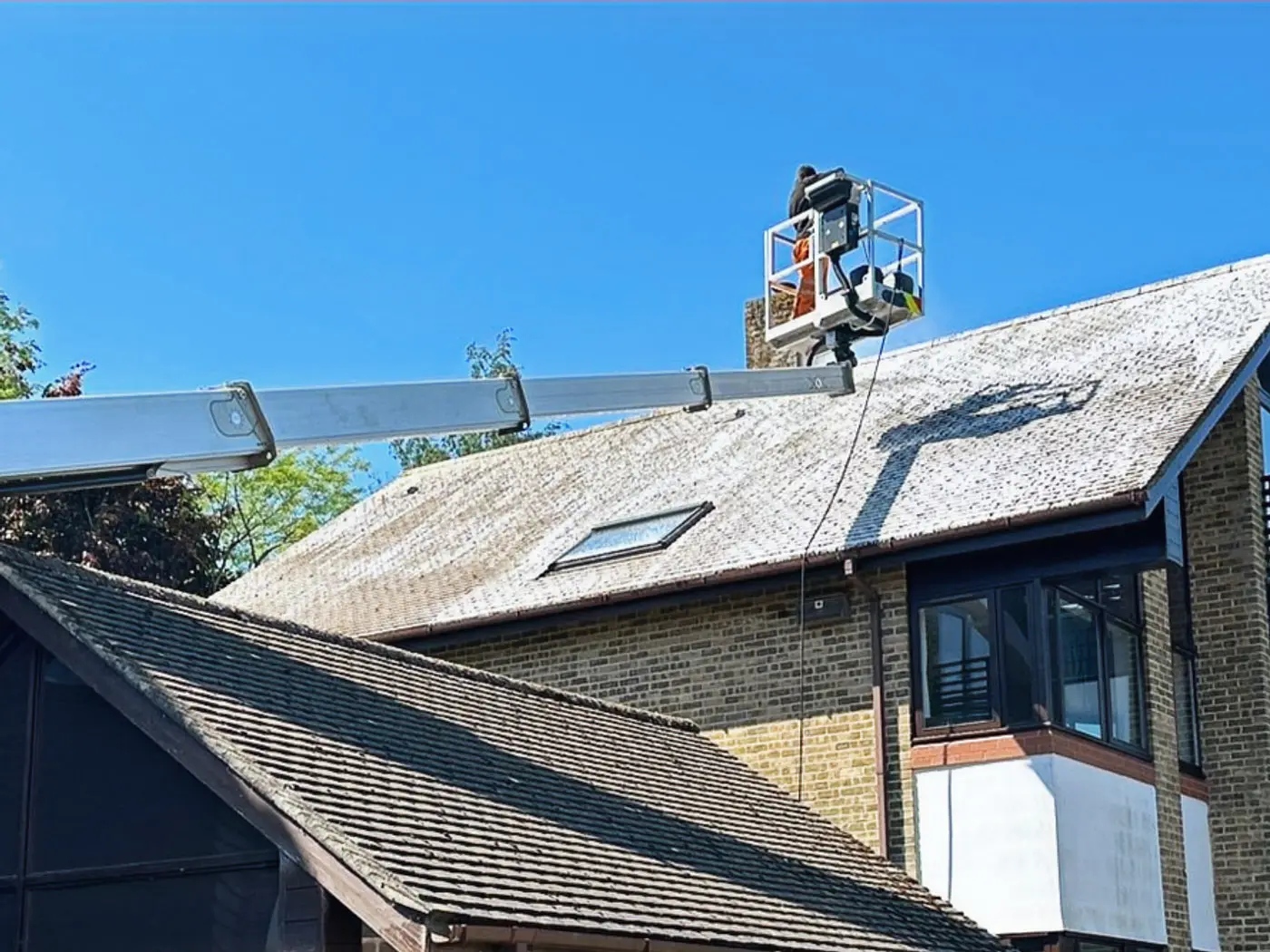
We choose the method to suit the covering: careful manual moss removal and a low pressure biocide softwash on concrete and clay tiles, and no high pressure on anything that would be harmed by it. Slate and older, softer coverings get gentler treatment again.
Every job includes clearing the moss out of the gutters afterwards — otherwise the first heavy rain moves the problem straight into the downpipes.
The short version
- Moss and staining alone are a cleaning job, not a replacement job.
- Delaminating, slipped or cracked tiles and internal damp point to genuine roof work.
- Cleaning typically costs a fraction of re-roofing and reveals any real damage.
- Method must match the covering — high pressure has no place on most roofs.