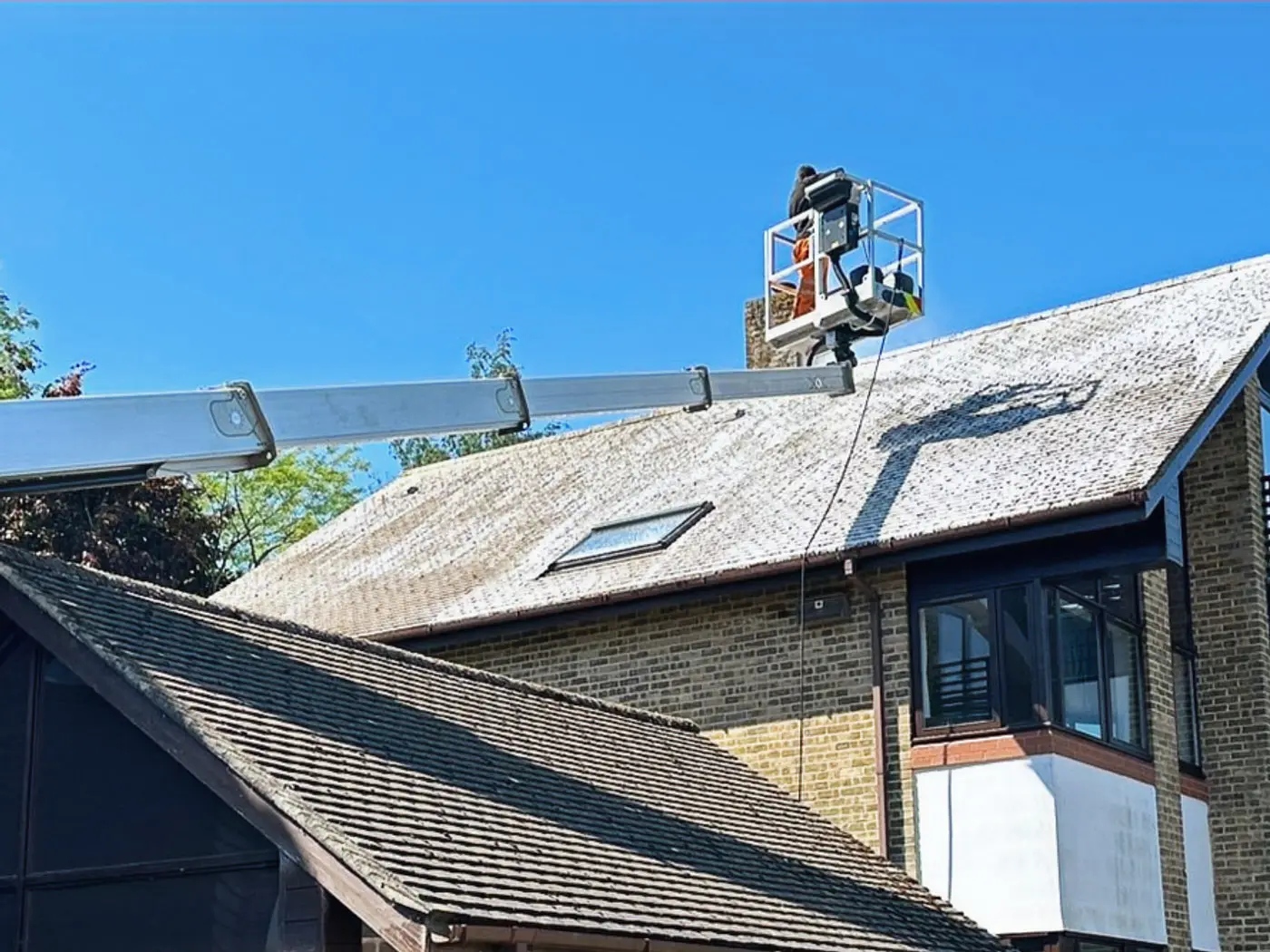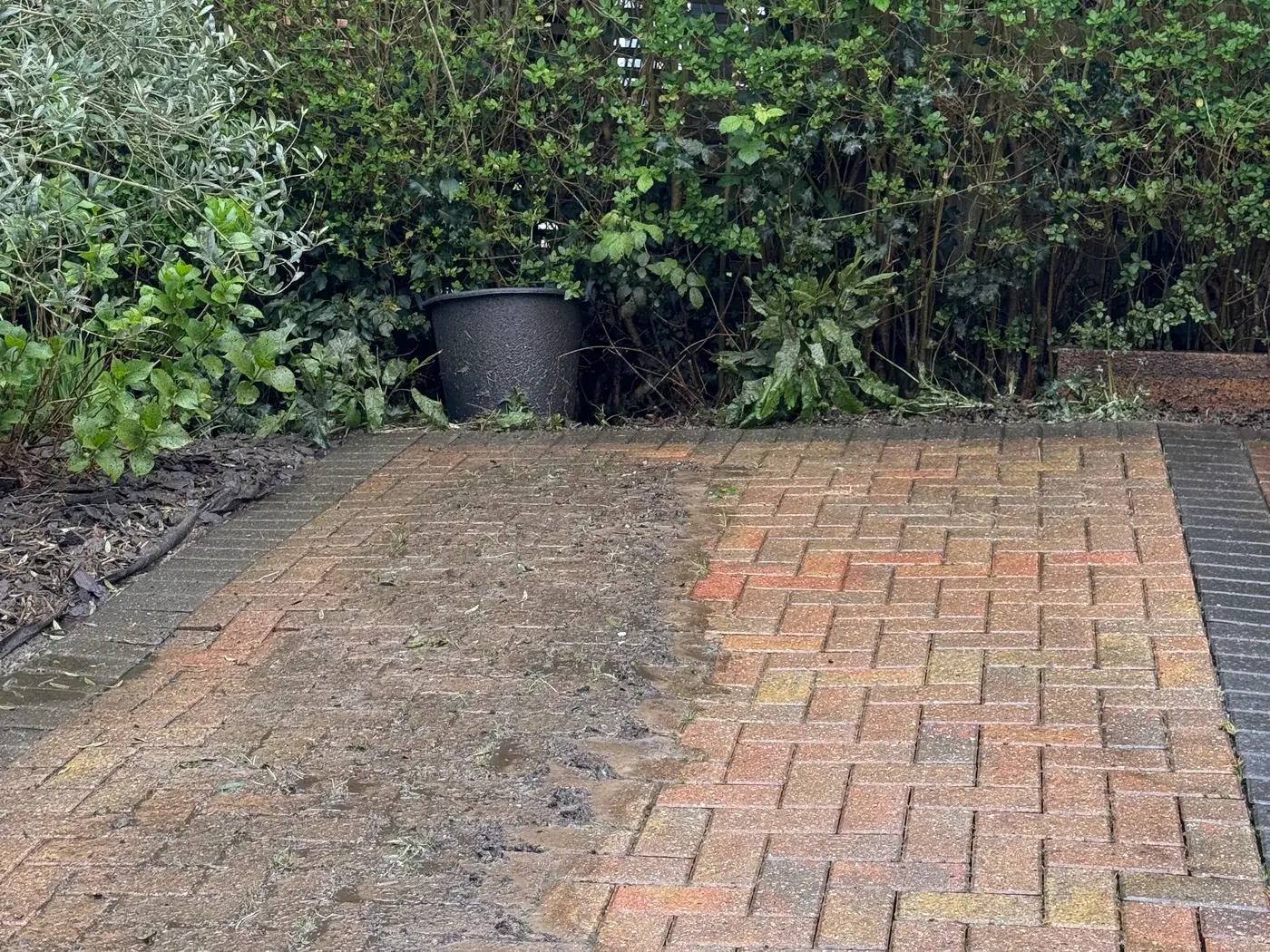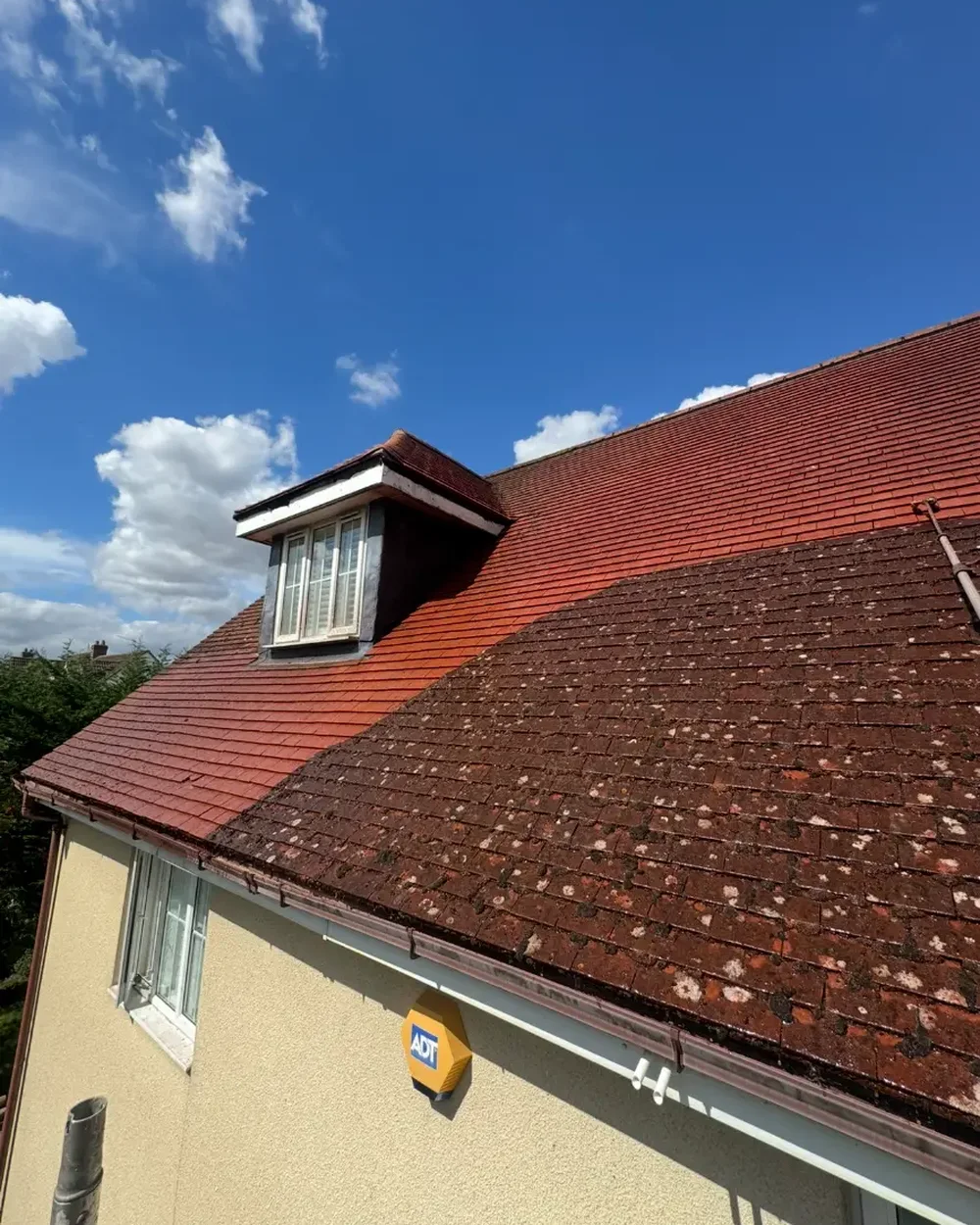
Kent gives moss almost everything it wants: mild winters, damp air off the Medway and the estuary, and long shaded spells under mature tree cover. It is why a roof here can carry a visible green cushion within a few years of a clean while an identical roof inland stays clear.
The mistake most people make is treating it as dirt to be blasted off. Moss and algae are living growth with roots in the surface, and if you only remove what you can see, it returns from what you left behind.
Know what you are looking at
Three different things get called 'the green stuff', and they need different handling.
- Algae — a thin green or black film on render, paving and north-facing walls. Surface-level, and the easiest to treat.
- Moss — a thick cushion with a root structure, most common on roof tiles, in paving joints and along shaded gutter lines.
- Lichen — flat grey, white or orange crusty patches, usually on roof tiles and stone. The slowest growing and the most stubborn.
Match the method to the surface
The right approach changes completely depending on what the growth is sitting on. Getting this wrong is how people end up with stripped tiles or blown render.
- Roof tiles — scrape and soft wash with a biocide. Never high pressure: it strips the protective surface off concrete tiles and drives water under the laps.
- Render, K-Rend, pebbledash and painted masonry — low-pressure softwash only. Pressure cracks and de-bonds render.
- Block paving and concrete — a rotary flat-surface cleaner at controlled pressure, then kiln-dried re-sanding.
- Natural stone patios — reduced pressure with the joints and edges detailed by lance.
- Fascias, soffits and the outside face of gutters — hand or brush scrub with a cleaning solution.
Why a biocide matters more than pressure
Physically removing moss leaves the spores and root remnants behind, which is why a purely mechanical clean can look green again within a season. A biocide treatment kills the growth itself, so what remains dies back and weathers off over the following weeks.
This is why a soft-washed roof sometimes keeps improving for a month or two after we leave, and why we would rather treat and wait than blast a tiled roof clean in an afternoon.
Stop it coming back
Every effective preventative measure is really about keeping the surface dry and clear.
- Cut back overhanging branches and hedges to get light and airflow onto the surface.
- Keep gutters clear — an overflowing gutter feeds a permanent green stripe on the wall and the paving below.
- Replace kiln-dried sand in block paving joints so weeds and moss cannot root.
- Clear leaf litter off paving in autumn rather than letting it rot in place over winter.
- Fix standing water: a blocked gully or a flat fall will undo any clean.
What about DIY treatments?
Household bleach, washing-up liquid and vinegar all get recommended online. Bleach discolours natural stone and kills planting where it runs off, vinegar etches limestone and sandstone, and none of them tackle the root structure properly.
For a small shaded path, a proper patio-safe biocide from a builders' merchant and some patience is a reasonable DIY route. For a roof, render or a full driveway, the risk of doing damage — or falling off a ladder — outweighs the saving.
The short version
- Identify algae, moss or lichen first — they are not treated the same way.
- Never put high pressure on roof tiles or render; soft wash them instead.
- A biocide kills the growth; pressure alone only removes what you can see.
- Light, airflow, working gutters and sanded joints are what keep it off.