Solar panels are sold as maintenance-free, and mechanically they nearly are. Optically they are not. Anything sitting on the glass is between the sun and the cell.
What actually reduces output
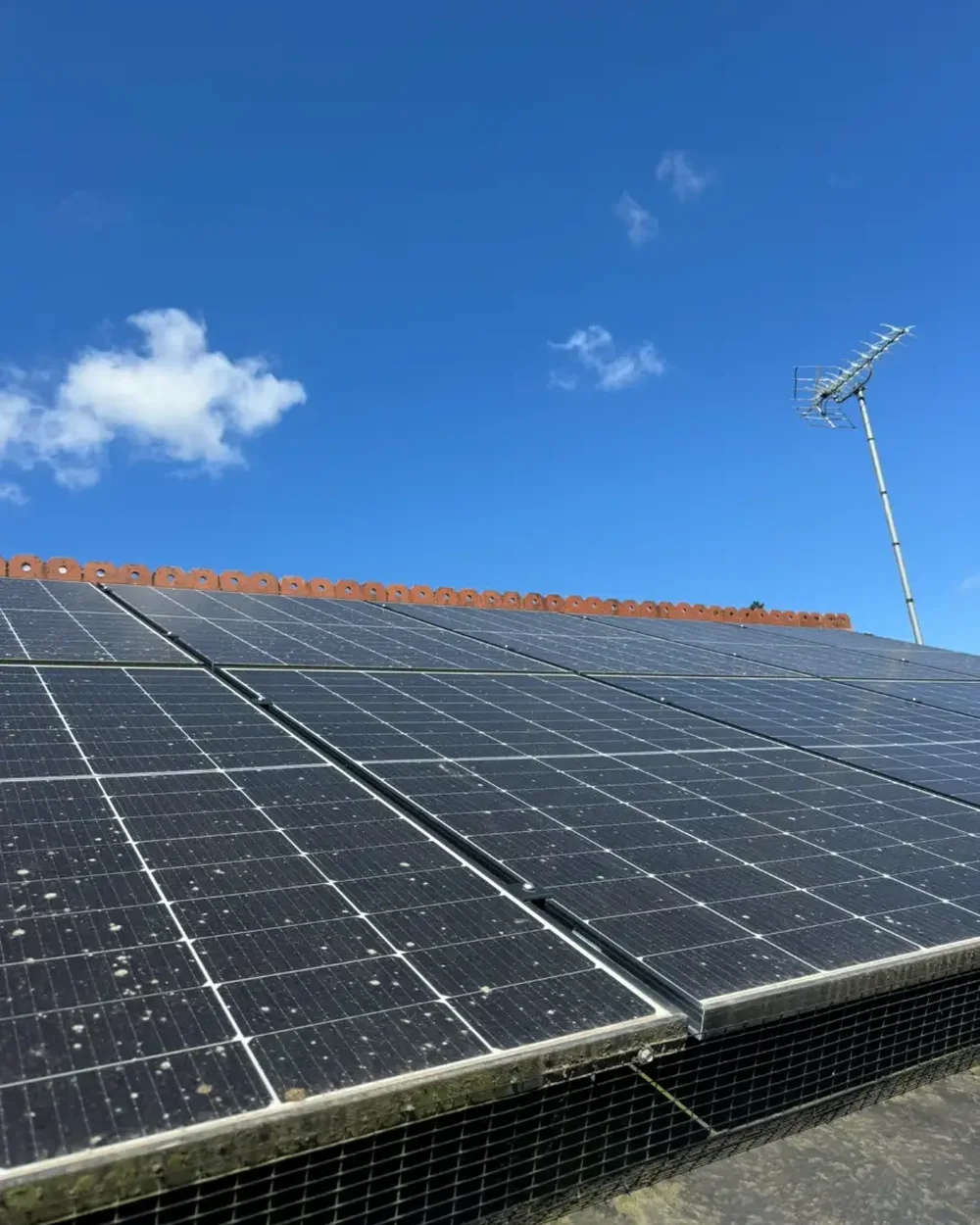
General film — pollen, dust, traffic grime — reduces light reaching the cells across the whole panel. More damaging is localised shading: a patch of bird mess, or the strip of moss and grime that builds along the bottom edge where water sits against the frame. Because cells are wired in series, shading one part of a panel can drag down the output of more than just that spot.
Panels on a shallow pitch and panels near trees, farmland or a busy road soil fastest.
Doesn't rain clean them?
Rain rinses loose dust off and leaves the rest behind, along with mineral deposits as it dries. It does nothing at all about bird mess or the moss line along the frame edge. On a shallow pitch, rain barely runs off at all.
How panels should be cleaned
Pole-fed pure water, from the ground, with a soft brush. Pure water is de-ionised, so it dries without leaving spots or a mineral film — no detergent needed and nothing left on the glass.
- No chemicals, which can damage anti-reflective coatings and void warranties.
- No pressure washing, which can force water past the panel seals.
- No walking on the array or leaning ladders against panels or frames.
- Bird proofing mesh checked at the same time where fitted.
How often
Once a year suits most Kent installations. Panels near trees, on farms, close to the coast or on a shallow pitch benefit from twice. The pattern to watch is your own generation data — a gradual decline through a dry spell that does not recover after rain usually means soiling.
Worth it or not?
For a small domestic array, cleaning is a modest annual cost that recovers lost generation and keeps the array looking right. For larger domestic and commercial arrays, where output is the whole point of the investment, it is straightforwardly worth doing on a schedule.
The short version
- Shading from bird mess and edge moss costs more output than general film.
- Rain does not clean panels; it leaves mineral deposits behind.
- Pure water pole systems only — no chemicals, no pressure, no ladders on the array.
- Annually for most homes, twice for tree-heavy, coastal or shallow-pitch sites.