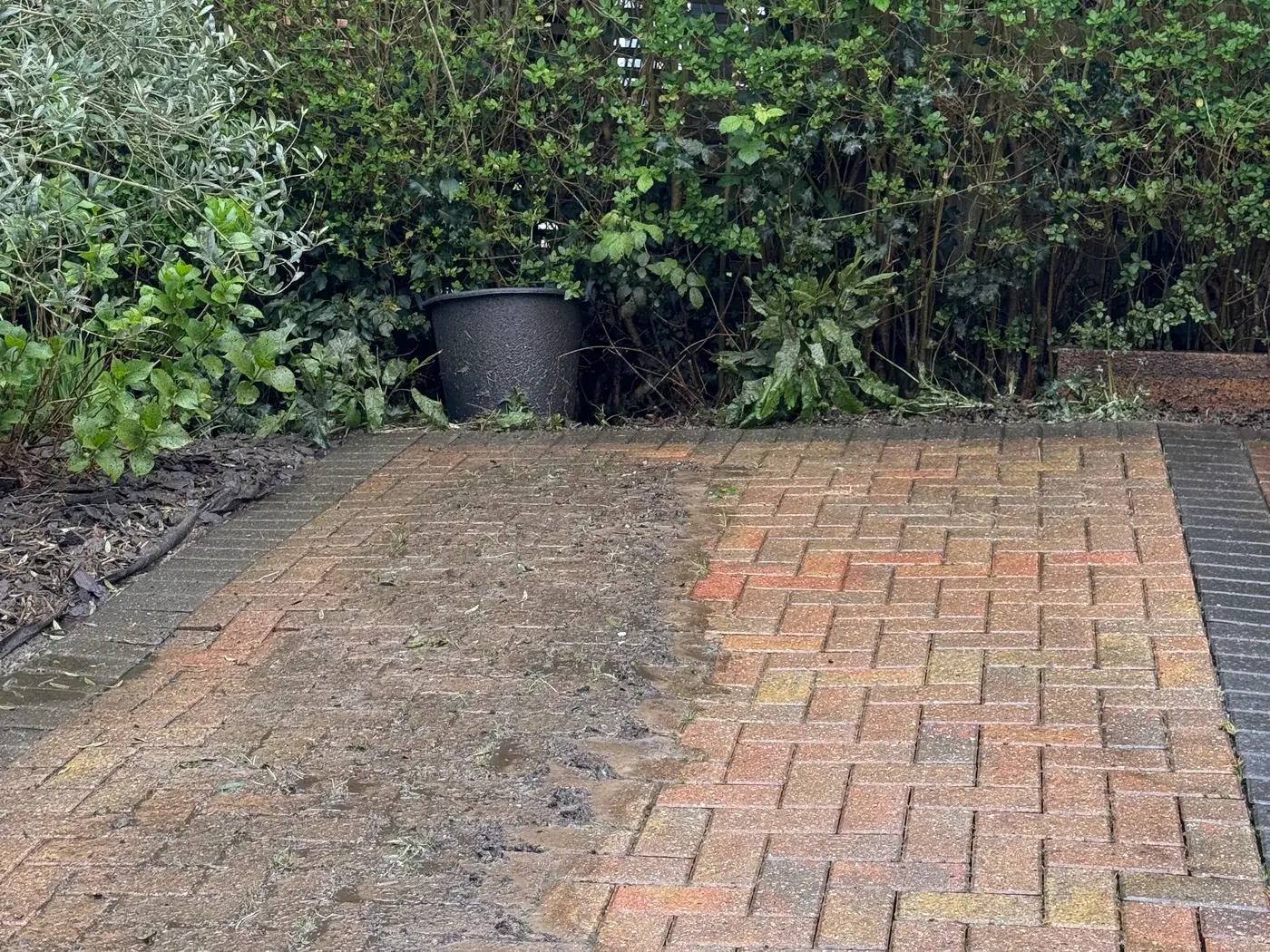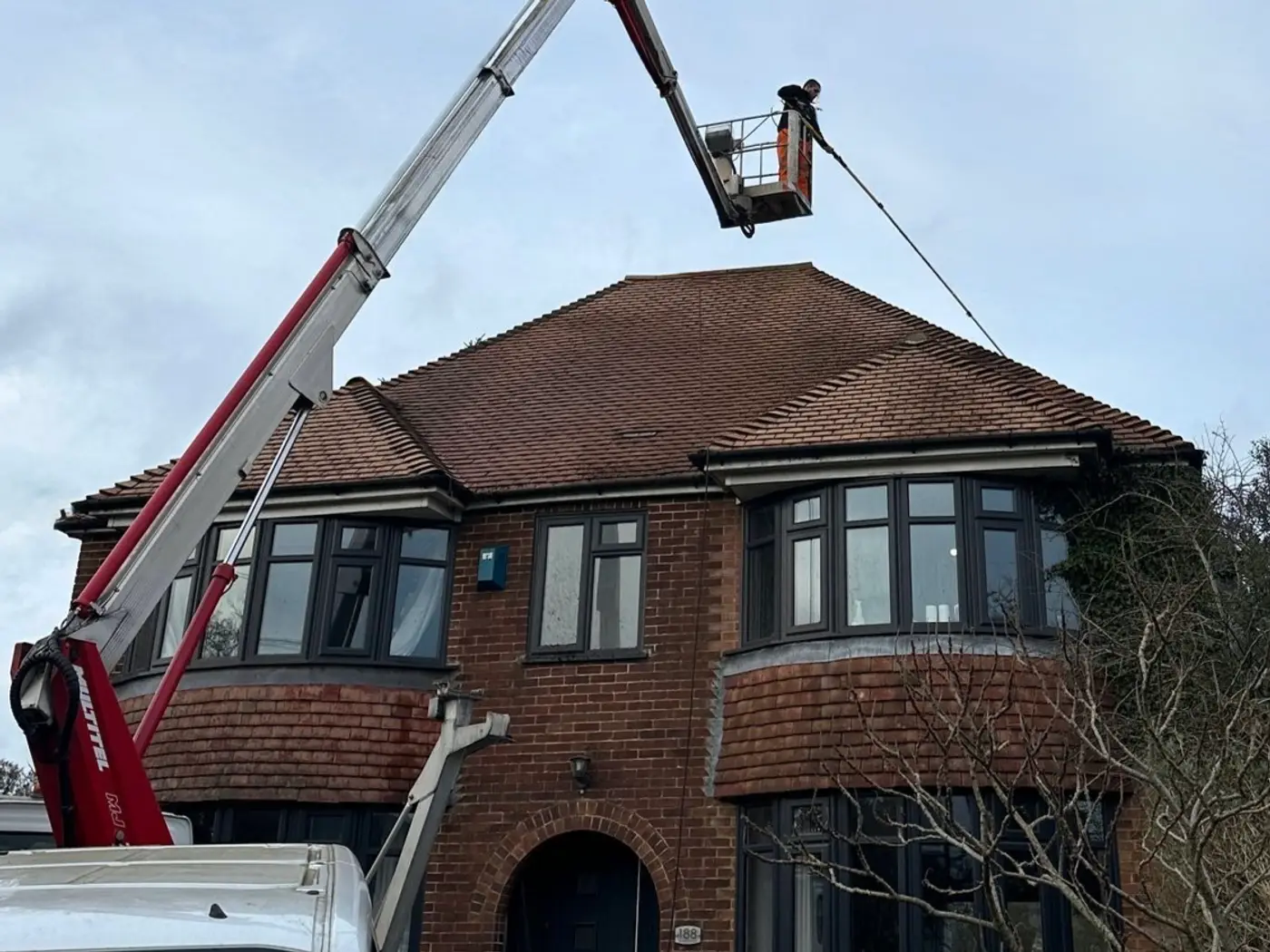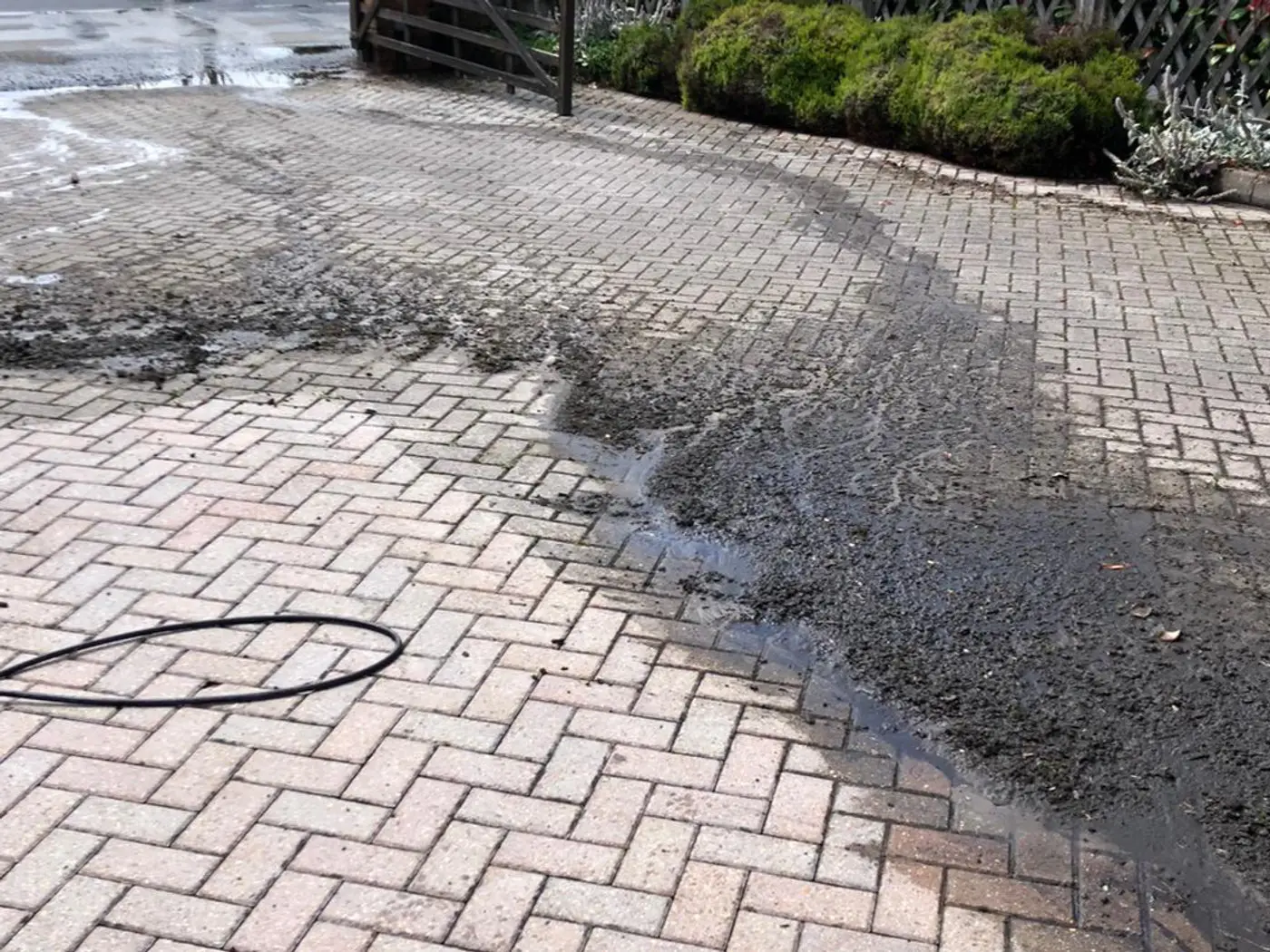
The British climate is close to ideal for algae: mild, damp, and rarely cold or dry for long enough to kill anything off. That is why a driveway looks superb in May and green again by the following March.
There is no fixed rule, but there is a workable default and a short list of factors that move it either way.
The default interval by surface
These are the intervals we actually see working across Kent, on domestic properties with no unusual problems.
- Block paving driveways — every 1 to 2 years, with kiln-dried sand replaced each time.
- Concrete and pattern-imprinted concrete — every 2 years; imprinted concrete also benefits from resealing.
- Tarmac — every 2 to 3 years, at reduced pressure, mainly to lift algae rather than to scour it.
- Indian sandstone and limestone patios — every 1 to 2 years; porous stone greens up quickly in shade.
- Porcelain paving — every 2 to 3 years; it holds up well but the joints still catch growth.
- Resin-bound drives — every 2 to 3 years, low pressure only.
What makes a surface re-soil faster
Two identical driveways on the same street can need completely different intervals. It usually comes down to how long the surface stays wet.
- North-facing aspect or a surface shaded by the house, a fence or a hedge for most of the day.
- Overhanging trees dropping leaf litter and sap onto the surface.
- Poor falls or a blocked drain, leaving standing water after every shower.
- Failed or missing jointing sand, which lets weeds root and holds moisture.
- A gutter overflowing onto the drive below — a surprisingly common cause of one persistently green strip.
How to stretch the interval
Cleaning is the reset; what you do afterwards decides how long it lasts. Re-sanding block paving with kiln-dried sand is included as standard in our driveway cleaning because open joints are the single biggest cause of fast re-growth.
Sealing is optional and suits block paving and imprinted concrete best. It will not stop algae outright, but it slows re-soiling and makes the next clean quicker. Fixing the reason a surface stays wet — a hedge cut back, a gully cleared, a gutter unblocked — is usually worth more than any coating.
Do not just wash it more often
Repeatedly blasting the same paving does damage over time. High pressure erodes the face of concrete blocks, scours the soft bedding out of natural stone joints and strips fines out of tarmac.
We match the method to the surface: a rotary flat-surface cleaner where the material takes it, a lance for joints and edges, and a low-pressure softwash approach on anything porous or fragile. Twice as much pressure is not twice as clean — it is just twice the wear.
The short version
- Every 1 to 2 years covers most driveways and patios in the UK climate.
- Shade and standing water matter more than how much the surface is used.
- Kiln-dried re-sanding after cleaning is what keeps block paving clean for longer.
- Cleaning more often at higher pressure damages the surface — fix the cause instead.