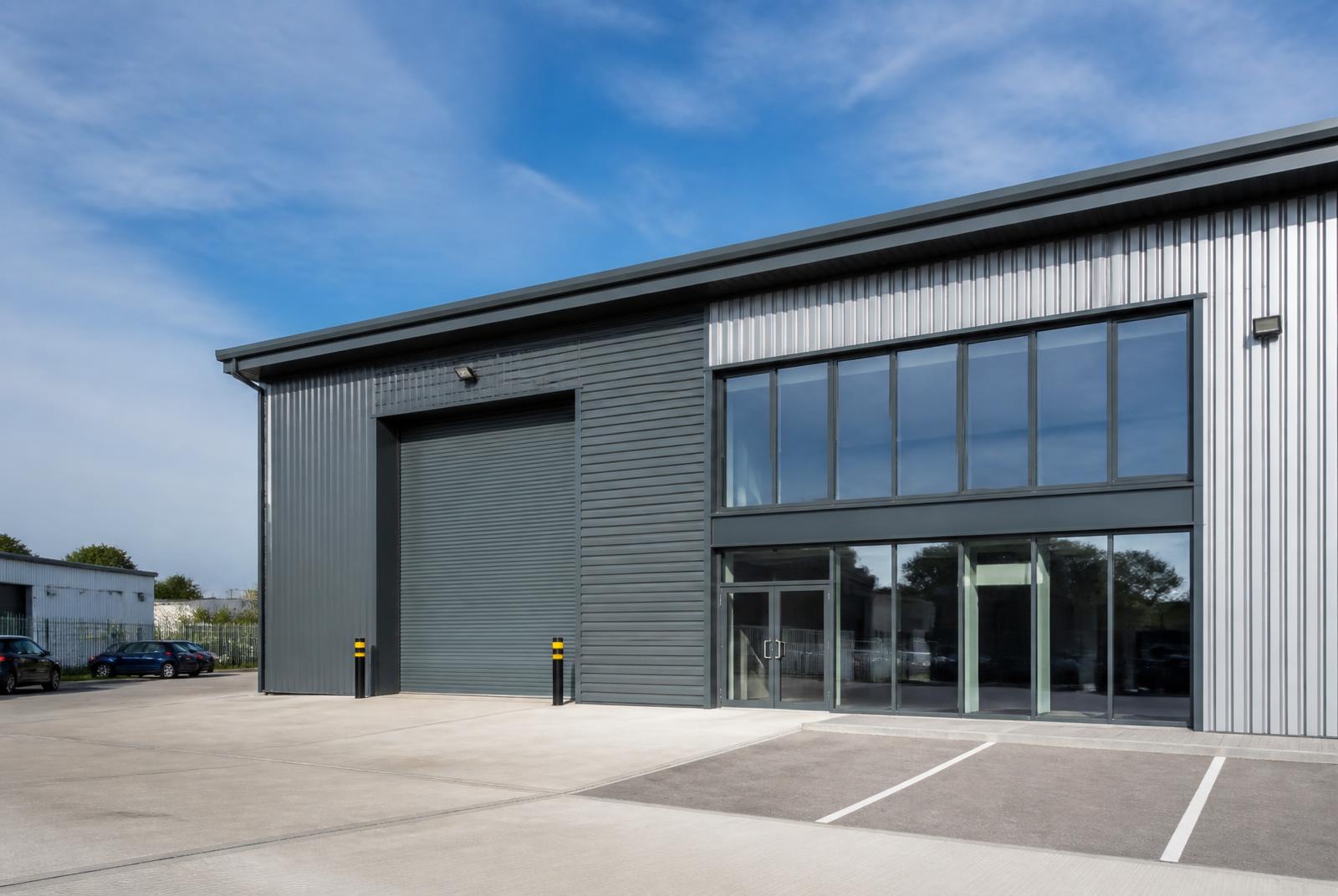
For a commercial site, the exterior is the first thing a customer, tenant or inspector sees. Green cladding, a stained forecourt and an overflowing gutter say something about the operation inside, fairly or not.
The cleaning method is largely the same as domestic work. What changes is the planning around it.
Working around trading hours
Most commercial cleans happen out of hours — early mornings, evenings, weekends or shutdown periods — so customers, deliveries and staff are not affected. Car parks and forecourts are usually done in sections so part of the site stays usable throughout.
Access and equipment
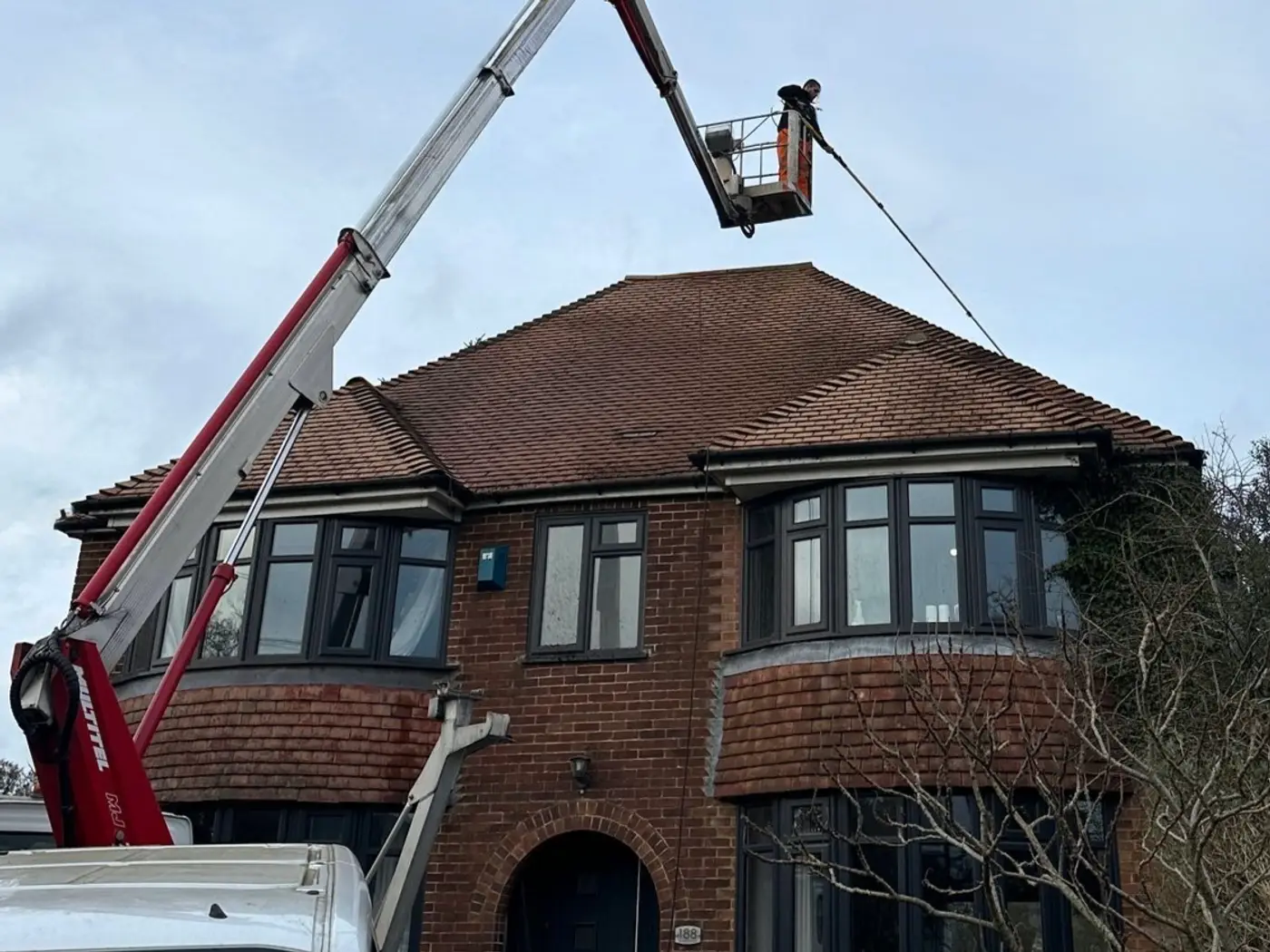
Industrial units, warehouses and retail parks need powered access or reach-and-wash pole systems for cladding, high gutter lines and signage. That has to be planned with the site: ground conditions, overhead cables, delivery bays and pedestrian routes all affect what can be positioned where.
Documentation
Expect — and ask for — the paperwork before anyone arrives on site.
- Public liability insurance certificate with the cover level stated.
- Site-specific risk assessment and method statement (RAMS).
- Working at height plan and operator competency where access equipment is used.
- COSHH information for any chemicals used on site.
- Waste water and run-off management, particularly near surface water drains.
What commercial sites typically need
The usual scope on a Kent industrial or retail site:
- Cladding and elevation softwashing to remove algae streaking.
- Gutter line clearing and flow testing across long runs and box gutters.
- Forecourt, service yard and car park pressure cleaning, including oil staining.
- Bay markings, walkways and loading areas cleaned back so they read clearly.
- Signage, entrance canopies and glazing detailed.
- Bin stores and service areas washed down and sanitised.
One-off or contract?
A single deep clean makes sense before a letting, an inspection, a rebrand or an open day. For sites where presentation is continuous — retail, hospitality, offices, managed estates — a scheduled maintenance contract is cheaper per visit, keeps the site consistently presentable, and means the gutter clear actually happens every year rather than after the first leak.
The short version
- Plan the visit around trading hours, not the other way round.
- Ask for RAMS, insurance and COSHH before the date is confirmed.
- Gutter runs and box gutters are the highest-risk item on most commercial buildings.
- Scheduled contracts cost less per visit and prevent the expensive failures.